Categories
Software Development Ui & Ux Designs

Time for a Website Redesign? Here’s 3 Signs It’s a Yes

Time for a Website Redesign? Here’s 3 Signs It’s a Yes

Dec 3, 2021 | Web Development

Not sure if your website needs a refresh? Informatics Design Guru Jeff Stephens explains the situations where a web redesign makes sense.
A slot machine

As we approach the end of the year, many companies and leadership teams are busy forming their marketing plans for 2022. For some, that may include either a website refresh or redesign. Should you be in that group?

Sometimes the answer to “should we redesign or not?” is obvious:

  • If your website has technical issues, such as an outdated CMS or code library, you will need a new site to work with current browser technologies and maintain security.
  • If your branding, products, services or other core features of your business have changed substantially since your last redesign, it may be easier to start from scratch than try to fit your new needs into your former website.
  • If your website traffic and conversion rates are consistently falling below target, a redesign may be needed to fully fix structural problems in your sales funnel.

Of course, that leaves a lot of websites somewhere in the middle. Maybe your site is looking a little old, but its structure is still serving clients; maybe it’s converting existing customers, but not really attracting new ones.

We regularly meet with prospective clients who have a lukewarm relationship with their websites, whether because of its performance, design or content, and a gnawing feeling that it could be so much better. (Newsflash: It can!)

We sat down with Informatics’ design guru Jeff Stephens about what makes a modern website effective and useful, whether it’s a brand site or ecommerce hub. He offered up the following three things as signs a rework might be in your company’s best interest.

1. Lacking a singular purpose and a clear funnel

We’re big believers in having a clear purpose, whether it’s a single piece of content or an entire website.

Focused, targeted efforts will always produce more results than a broader approach. Even the biggest, most complex websites can be boiled down to one core goal, whether that’s to sell products or raise awareness of an issue or brand.

Of course, knowing your goal is only half the battle. Everything your website does should be in service to that goal and driving the user in that direction (as illustrated in the common conversion funnel below).
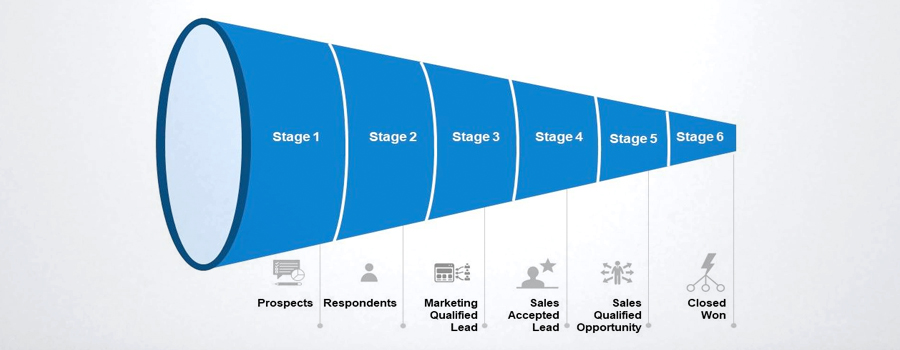
conversion funnelDon’t make users think about their options or where else on your site they could be exploring—your website’s job is to drive conversions, whether that’s:

  • A sale
  • A form submission
  • A view of your video
  • A subscription to your e-newsletter
  • A phone call or appointment with your business
  • A download of your brochure or podcast

Ask yourself: What are you trying to accomplish with your website? Then ask that of every single design element, page and feature on your site—how does it drive the user to accomplish that goal?

Improving your site’s focus and purpose can range from simple tweaks of your content and SEO strategy to a more in-depth revamp of your user interface and experience. Here at Informatics, we’re always available to offer an outside opinion on what exactly your site needs to engage users and drive conversions.

2. Lacking SEO-friendly content and design

You need a purposeful, singular message to drive conversions, but great content and design are also key when it comes to catching and keeping customers.

It only takes users about 50 milliseconds to form an opinion of your website. With so much competition online, you’ve got to grab them from the minute your page loads with sharp brand visuals and punchy text.

Remember that SEO optimized content is the “foundation of search,” as Hubspot puts it. Good SEO will always drive more targeted traffic to your site than social media. People are searching for the products and services you offer—you just have to speak their language to be found and demonstrate your expertise in an approachable manner to keep them listening.

The bottom line: If your website copy and imagery don’t work together to immediately convey what your company does, you need to rework it.

3. Poor Core Web Vitals

If your site is slow to load, none of the previous points really matter.

Research shows that web users are extremely sensitive to page load times; web firm Blue Corona reports that websites taking longer than 2 seconds to load are abandoned by about half of visitors.

With each additional second that ticks by, conversion rates drop by roughly 5 percent a second, according to Hubspot.

Compounding the issue is Google’s recent addition of page load speed metrics—known as Core Web Vitals—to its ranking factors, meaning a site that performs poorly in this area could see its search ranking slip. That means fewer visitors finding your site in the first place, and fewer chances for a conversion.

The good news is that a lot of things can be done to make your website pages load more quickly, from loading the page code faster to delaying the loading of larger assets.

The design and development teams here at Informatics put a focus on creating lightning-fast pages to maximize impressions, and you should too.

If you’re ready to take your website to the next level in 2022, reach out to the experts here at Informatics. We have a passion for building high-performance websites that solve your business needs, whatever they may be.

***

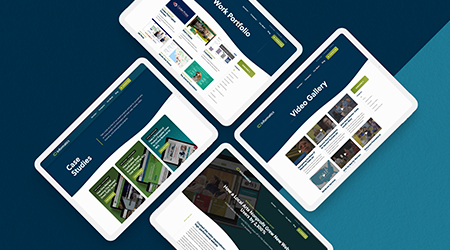
Looking for more tips on creating a high-performing website? Watch our short explainer video below on website design trends starring Informatics’ leading dog, and watch the full Pip’s Tips series here!
Categories
Software Development Ui & Ux Designs

It’s Spring Cleaning Time—How’s Your Website?

It’s Spring Cleaning Time—How’s Your Website?

Apr 21, 2022 | Inside Informatics

Business websites can get cluttered and overgrown if you’re not careful. Here’s how we recently updated our own website, and how you can, too.

Screenshot of new website content on informaticsinc.com

Ah, spring cleaning—a very real need, and not just for your garage.

If you want to keep customers engaged and interested in your brand, you need to make sure you’re regularly sprucing up your business website and offering new pieces of value. When’s the last time you updated your website content or added new video to your landing pages?

On the flip side, we know that things change with business all the time. Are you sweeping out old products or services, or incorrect contact emails or addresses? It’s a never-ending  process, but one that’s essential if you want your brand to remain relevant and search engine optimized.

Here at Informatics, our Digital Marketing and Web Design teams have been hard at work on our own spring cleaning list. When it comes to our website, we’ve pushed out the dust and added new ways for prospective clients to see and share our work more easily. Hopefully we can inspire you to look at your own online branding and polish  up for spring. (And we’re always ready to help!)

What’s new at Informaticsinc.com?

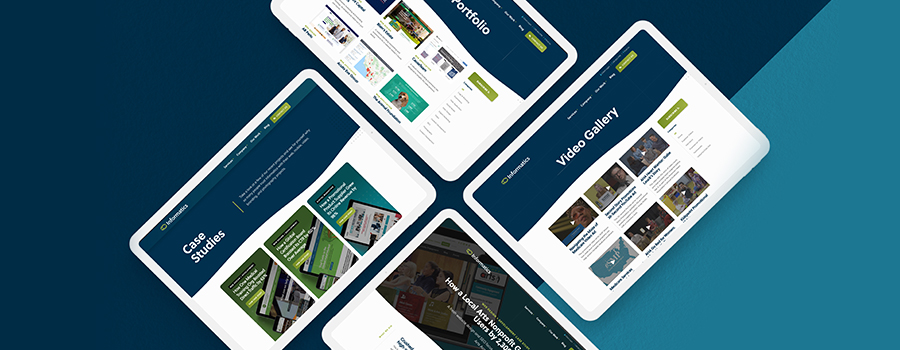
Creative Work Portfolio

From logo design and branding to mobile app development, we really are All Things Internet. View a constantly expanding collection of our creative work in one spot on our new Work Portfolio page, and see how we might be able to help your marketing efforts.

Video Gallery

Our Media team has built out a comprehensive YouTube presence, but we also wanted to make sure our video work is available to website visitors so they don’t need to go elsewhere. Our new Video Gallery page features a sampling of our work across several different categories, from drone video to YouTube ads. Get inspired for your next web video!

Refreshed Case Studies

When you’re ready to dive a little deeper into our digital services and solutions, we’ve revamped our Case Studies to better showcase how we’ve helped our regional and national clients exceed their marketing goals. From engaging web designs and email campaigns to comprehensive branding and advertising initiatives, get deeper insights on just what solid marketing strategy can accomplish.

We’ve also made a lot of small nips and tucks sitewide to polish our brand even further, but we won’t go through those—we’ll just let you explore and see what you discover.

Tips for cleaning your own website

You don’t have to make major changes or add entire webpages to your site to have an impact on your brand. Here’s a few suggestions we give our clients looking to freshen their digital presence:

  • Remove outdated information about your business, whether that’s discontinued products, pandemic hours or old locations.
  • Make sure your website information aligns with your Google My Business profile. This is an easy fix, but one that’s frequently ignored or forgotten. Being highly consistent with your core business info like your address, phone number and hours on your website and in your other online touchpoints will build your local SEO rankings with Google.
  • Refresh your digital assets. If your visitors have seen the same face and desk shot every time for the last two years, they will stop looking unless they’re deriving a lot of other value from your site. Consider commissioning new photography, video production or graphic design services to freshen your website design.
  • Add value for your readers. We’re always preaching the importance of adding new content like blogs, video and graphics, but you should also focus on things like business resources and whitepapers. If you can help your customers in ways big and small, they’ll come back when it’s time to do business.

When you’re ready to talk about cleaning up your site, give us a call! We’re ready to roll up our sleeves and get to work.

Categories
Ui & Ux Designs

The Importance of UI/UX for your Online Business

Imagine sitting down to watch a highly anticipated action movie, only to find that it lacks excitement, meaningful plot twists, and thrilling sequences. Your reaction? Boredom and a sense of wasting your valuable time.

Similarly, when you build software products, the absence of a well-crafted UI and UX design can leave your customers feeling disconnected and unengaged.

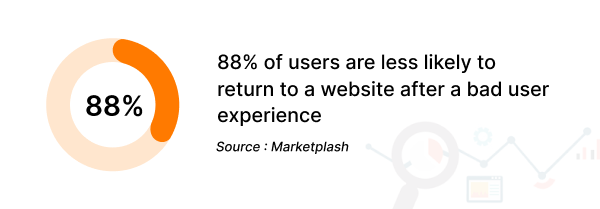
When a user downloads your new app from the App Store or visits your newly created website, the first experience decides the success of your product.

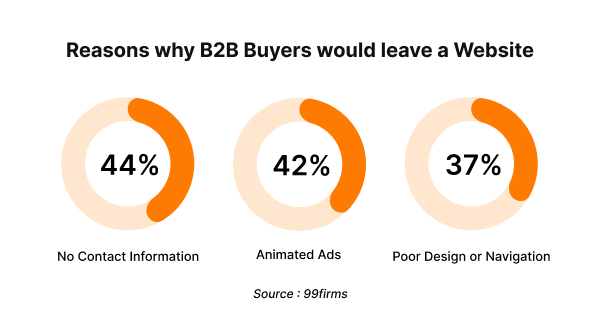
Despite having the best of technology stitched together behind the scenes, startups and enterprises seldom find themselves in a spot of bother if the experience of using the product is poor.

Website User Experience

In the context of building websites and web platforms, building a great User experience (UX) is extremely essential. An enhanced UX enables you to attract more prospects, increase conversions, sales, and overall profitability, and have better customer retention.

Mobile App User Experience

When building a mobile app, the user journey of an app user is critical to its success. It helps build brand and product loyalty.

Companies like Airbnb, Uber, Zomato and many others owe much of their success to their user-centered design approach which culminates in an exceptional user experience.

Did you know? The average smartphone user has around 80 apps on their device but uses only around 9 of them daily. It reflects the challenge app developers face in capturing and maintaining users’ attention in a crowded market.

“UX design is about “Engagement”, building a relationship with your customer.”

Getting Started with UI/UX

It starts with “Knowing your user”. Hence, there must be a well thought out User Experience strategy in defining workflows based on varied users and their expected behavior. Factors like considering demographics of users such as potential age groups expected to use the app are important.

Here are some examples of building great Customer Journeys.

The UX design trends in 2023 and 2024 will be focused on creating immersive and creative experiences by using new technologies and shifting from minimalist visuals to more vibrant UIs.

Focus will be on inclusivity and accessibility. Creating solutions will revolve around creating experiences that are open to all, regardless of age, language and culture.

It’s time to revisit your website and check if its still overloaded with information and irrelevant images. The trend of large images, large fonts, and immersive experience will surely continue beyond 2023 into 2024.

Connect with our team to perform a no-obligation site or app review of your UI/UX. We would be happy to do a Proof of Concept going forward.

Categories
Ui & Ux Designs

UI/UX Design Trends of 2025: Next-Gen Experiences

At the heart of evolution lies a constant focus on the user, aiming to make interactions effortless, delightful, and accessible. The UI/UX landscape continues to evolve at a rapid pace. Designers and developers are leveraging new technologies and methodologies to create more engaging, intuitive, and immersive user experiences.

To stay ahead in this dynamic field, businesses should consider when to hire UI/UX developer who can bring these cutting-edge trends to life. By understanding these trends, businesses can create interfaces that not only look stunning but also drive user engagement and loyalty. Let’s delve into the current UI/UX design trends, the latest designs being utilized, and the future scope of UX design.

The Latest UI/UX Design Trends

1. Immersive Experiences with AR/VR

Augmented Reality (AR) and Virtual Reality (VR) are transforming user interfaces by providing immersive experiences. From virtual shopping sprees where you can try on clothes in your living room to interactive learning environments that bring history textbooks to life, AR and VR are enhancing user engagement and creating more dynamic interactions. 

The AR & VR market in India is projected to reach a revenue of ₹US$789.0m in 2025. It is expected to experience an annual growth rate (CAGR 2025-2029) of 9.74%, resulting in a projected market volume of ₹US$1,256.0m by 2029. 

Source: Statista 

AR and VR aren’t just flashy additions to the UI/UX toolbox; they represent a fundamental shift in how users interact with digital experiences. Traditional interfaces confine users to two-dimensional screens. AR and VR, however, break these barriers. AR overlays digital elements onto the real world, fostering a sense of seamless integration. VR creates entirely immersive environments, allowing users to step into the digital world. This opens a plethora of possibilities for UI/UX designers. They can craft experiences that are not just informative but truly engaging, allowing users to learn, explore, and interact in entirely new ways. 

2. Neumorphism

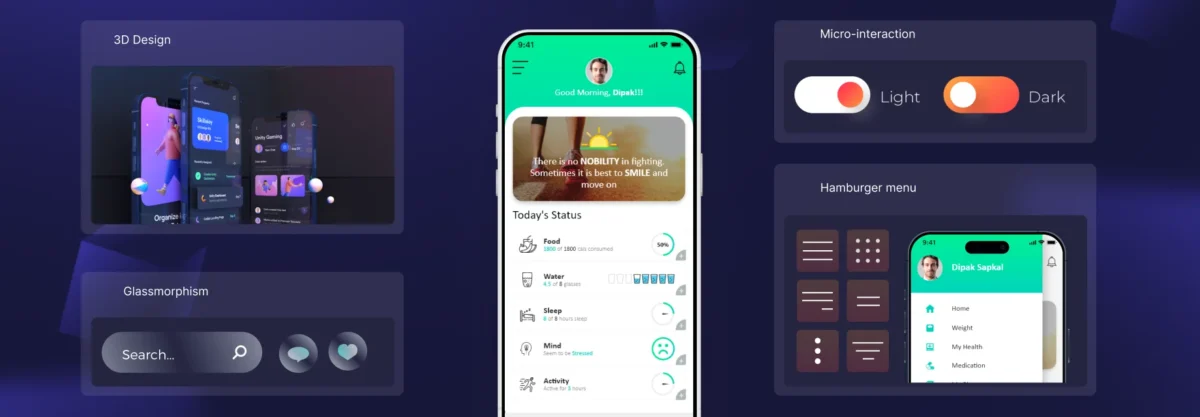
Neumorphism combines skeuomorphism and flat design, creating soft, extruded plastic-like interfaces. This trend adds depth and a tactile feel to digital elements, making interfaces more visually appealing and interactive. 

Example: The new Apple Music app interface uses neumorphism to create a more tactile and engaging user experience. 

3. Voice User Interface (VUI)

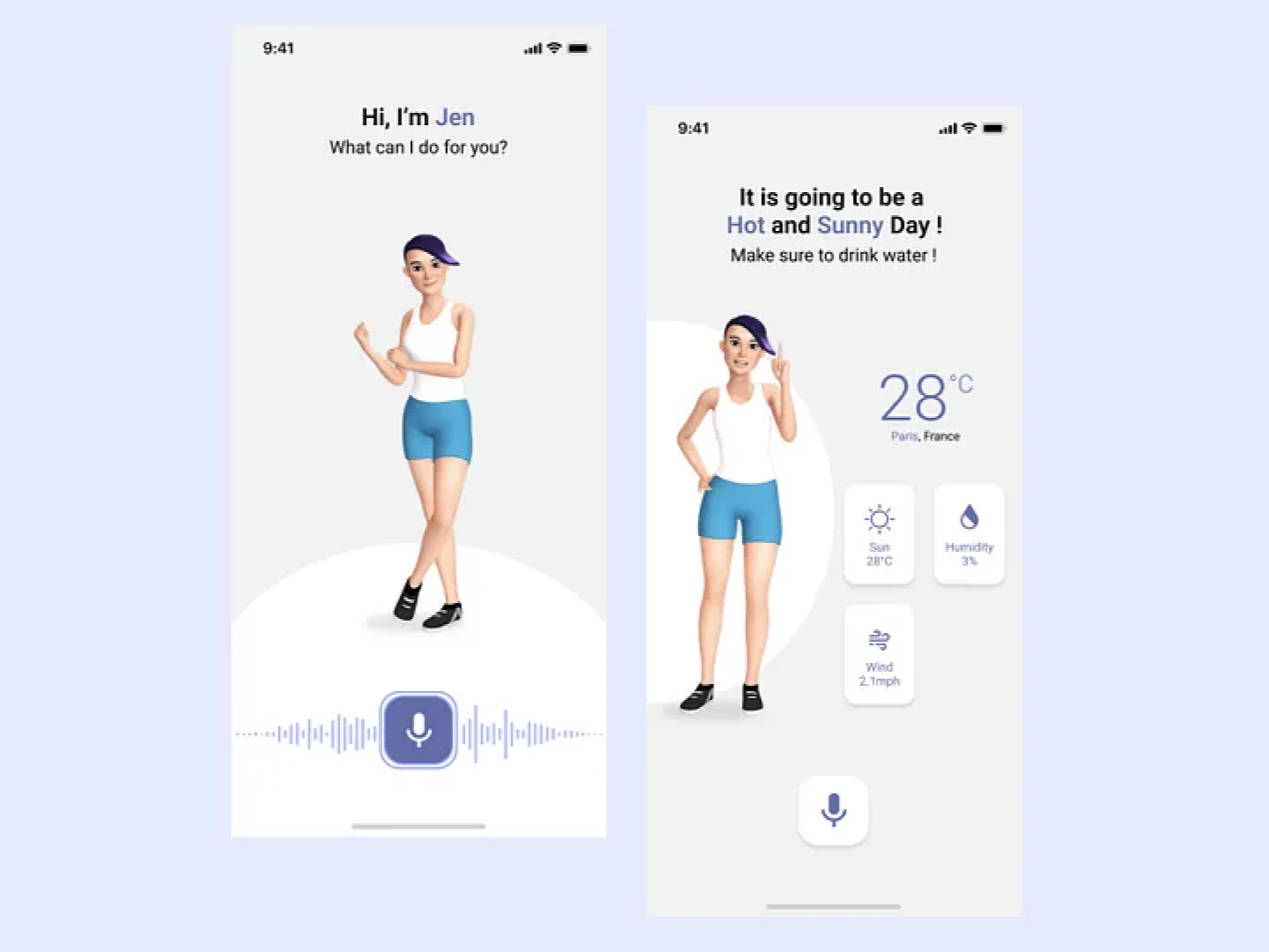
With the rise of smart speakers and voice assistants, VUI has become a crucial part of UX design. Designing intuitive voice interactions and ensuring seamless voice commands integration are key focus areas in 2025. 

user experience trends

4. Minimalistic Design

Minimalism continues to dominate, emphasizing simplicity and clarity. Clean layouts, ample white space, and a focus on essential elements help in creating a distraction-free user experience. 

5. Dark Mode

Dark mode is not just a trend but a necessity now, offering users a visually comfortable experience in low-light environments. It also helps in reducing eye strain and saving battery life on OLED screens. 

Example: Instagram, Twitter, and many other social media platforms have introduced dark mode options. 

6. 3D Graphics and Animations

The use of 3D elements and animations is on the rise, providing a more engaging and interactive user experience. These elements can make a significant impact, especially in e-commerce and gaming applications. 

Example: Shopify’s product pages use 3D models to allow users to explore products in detail before purchasing. 

7. Micro-Interactions

Micro-interactions are subtle animations that guide users and enhance the overall experience. These include button animations, hover effects, and progress indicators, making interactions more intuitive and enjoyable. 

Example: LinkedIn’s animated reactions for posts and messages. 

8. Sustainable Design

Sustainability is becoming an integral part of UI/UX design. Designers are focusing on creating digital products that consume less energy and resources, contributing to a greener digital ecosystem. 

Latest Designs Used in 2025

Responsive and Adaptive Layouts

  • Designs that seamlessly adapt to various screen sizes and orientations are more important than ever. This ensures a consistent experience across all devices, from smartphones to large desktop monitors. 

Custom Illustrations and Iconography

  • Unique illustrations and icons help in establishing brand identity and creating a memorable user experience. Custom graphics are more engaging than generic stock images. 

Asymmetrical Layouts

  • Breaking away from traditional grid layouts, asymmetrical designs provide a dynamic and modern look. These layouts add visual interest and guide users’ attention to key elements. 

Glassmorphism

  • Building on the trend of transparency and blurred backgrounds, glassmorphism adds a modern and sleek aesthetic to interfaces. This design trend is often seen in dashboards and data visualization tools. 

Case Studies and Real-World Applications

Several companies have successfully integrated AI in their design processes, leading to improved user engagement and satisfaction. These success stories showcase the transformative power of AI in UI & UX design. 

Future Scope of UX Design

The future of UX design is poised to be more user-centric and technologically advanced. As businesses seek to stay ahead of the curve, it’s crucial to hire UX designer who can navigate these emerging trends and innovations. Key areas to watch include:

1. AI and Machine Learning Integration

AI and ML will play a significant role in personalizing user experiences. Predictive analytics and intelligent recommendations will make interfaces more responsive to individual user needs 

2. Biometric Interactions

With advancements in biometric technology, interfaces will evolve to include facial recognition, fingerprint scanning, and gesture-based controls, enhancing security and user convenience. 

3. Emotional Design

UX design will increasingly focus on creating emotional connections with users. This involves understanding user emotions and designing interfaces that evoke positive feelings and satisfaction. 

4. Inclusive and Accessible Design

Ensuring that digital products are accessible to all users, including those with disabilities, will be a primary focus. This involves adhering to accessibility standards and designing for inclusivity. 

5. Hyper-Personalization

Future interfaces will leverage user data to offer highly personalized experiences. This could include customized content, tailored recommendations, and interfaces that adapt to user preferences and behaviors. 

Types of UX Trends

  • Behavioral UX Trends

Trends focused on understanding and predicting user behavior to design more intuitive interfaces. This includes user journey mapping, user testing, and behavioral analytics. 

  • Aesthetic UX Trends

Trends that revolve around the visual and sensory aspects of design, such as color schemes, typography, and visual hierarchy. 

  • Technological UX Trends

Trends driven by technological advancements, including AI, AR/VR, and IoT integration. 

  • Strategic UX Trends

Trends that involve long-term planning and strategy in UX design, such as user-centric design thinking and agile methodologies. 

The UI/UX design trends of 2025 are all about creating next-gen experiences that are immersive, intuitive, and user-centric. As technology continues to evolve, so will the approaches to designing user interfaces and experiences. By staying updated with the latest trends and anticipating future developments, designers can create impactful and engaging digital products that meet the ever-changing needs and expectations of users.  

Categories
Software Development Ui & Ux Designs

Design and Function : Which of these is more important while designing applications?

In the rapidly evolving world of technology, the success of an application hinges on a delicate balance between design and function. While both design and function are crucial components, the relative importance of each can vary depending on the specific app and its target audience. Let’s delve into this age-old debate and explore how design and function interact to create exceptional user experiences.

Any electronic device or application for that matter, owes its existence to two reasons – Design and Features. The delicate nature of application development begs to dwell on the intricacies that clearly implicates the functional details as well as proves its market efficiency. With increasing number of competitors, the market looks as daunting as ever, and this has forced the developers to ponder over the ‘enticing’ factor that could increase their customer base.

Why is Functionality Important in Design

At the core of any app is its functionality. It’s the reason why users download and use the app in the first-place Robust features, intuitive interfaces, and seamless performance are essential to meet user expectations and drive engagement. In today’s competitive landscape, apps that fail to deliver on their core promises are quickly forgotten.

Recent statistics underscore the importance of functionality:

  • A study indicates 90% of users have stopped using an app due to poor functional performance.
  • 84% of users consider app functionality more important than aesthetic design.

The Importance of Design

While functionality is the foundation, design is the face of an app. A visually appealing and well-crafted interface can significantly enhance the user experience and leave a lasting impression. Design elements such as color schemes, typography, and layout play a crucial role in creating a cohesive and enjoyable app.

The Balancing Act

The ideal app strikes a harmonious balance between functionality and design. Neither should be sacrificed for the other. A feature-rich app with a poor user interface can be frustrating to use, while a visually stunning app with limited functionality may fail to meet user needs.

To achieve the perfect balance, consider the following tips:

  • Prioritize user needs: Understand your target audience and their pain points. Design and features should be tailored to address their specific requirements.
  • Invest in usability testing: Conduct thorough testing to identify any usability issues and make necessary improvements.
  • Consider the app’s purpose: For productivity apps, functionality may take precedence, while for entertainment apps, design might be more critical.
  • Stay updated with design trends: Keep up with the latest design trends and best practices to create a modern and engaging app.

Comparison of Design and Function

Feature Design Function
Focus User experience, aesthetics, branding Problem-solving, efficiency, performance
Impact First impressions, engagement, brand perception User satisfaction, retention, loyalty
Key Elements Visual appeal, layout, typography, color scheme, branding, consistency Features, performance, usability, intuitiveness, accessibility
User perception Emotional response, enjoyment, memorability Problem-solving ability, ease of use, effectiveness
Development considerations User research, prototyping, iterative design Requirements gathering, technical feasibility, scalability
Measurement User satisfaction surveys, A/B testing, click-through rates Usage metrics, conversion rates, customer support inquiries

The Editor’s Verdict – Design Vs Function

Ideally, in the comparison of design and function, high functional capability and design parameters would bring out the best applications in the market. However, if budget is the key, then first the functional requirements have to be successfully met, according to the user’s needs. User retention, however, is a major topic in this discussion. As Ferdinand Porsche rightly puts it across, “Design must be functional, and functionality must be translated into visual aesthetics.” For starters, reach out for the moon, go out there and build your own formula for a successful application launch!

In conclusion, both design and function are essential components of successful app development. By understanding the interplay between these two elements and striking the right balance, you can create apps that not only meet user needs but also delight and engage them.

If you are looking for mobile app development company who innovatively balance out the design and function as per your requirement then contact Intelegain Technologies for FREE consultation.