

Modern enterprises thrive on the strategic use of enterprise applications. Their integration into core business processes has significantly improved operational efficiency and enhanced interactions with both employees and customers. As a result, enterprise application development has become vital for driving key business outcomes.
According to Statista, the global Enterprise Software market is projected to reach US $316.69 billion by 2025. Enterprise applications have become a preferred solution for tackling data protection and privacy challenges. To make the most of these tools, partnering with an enterprise software development company is essential, as they offer a wide range of enterprise mobility services.
What is Application Modernization?
Application modernization is the process of upgrading legacy software systems to meet current business needs and adopt modern, scalable infrastructure. It ensures that enterprise applications stay secure, efficient, and flexible by transforming outdated systems through methods like re-platforming or full replacement. This helps organizations maintain reliability and support ongoing growth.
Common strategies include rehosting to the cloud with minimal changes, refactoring code for better performance, or rearchitecting to fit modern standards. In some cases, old systems are replaced entirely with cloud-native solutions. These methods simplify operations and make future updates easier to manage.
Why is Enterprise Application Modernization Important?
Enterprise application modernization goes beyond a simple technology update; it has become essential for maintaining business efficiency and competitiveness. Aging systems can slow down operations and hinder the ability to adopt new innovations. Here’s why many organizations choose to modernize their applications:
Security: Older applications are more vulnerable to security threats and may not meet current compliance standards.
Scalability: Legacy systems often cannot support the growing demands of modern businesses.
Integration: Connecting outdated systems with newer technologies can be challenging and unreliable.
Cost: Operating and maintaining old infrastructure usually leads to higher costs and resource usage.
User Experience: Today’s users expect responsive, user-friendly, and cloud-enabled applications.
Understanding Enterprise Application Development
Enterprise Application Development involves the strategic design, implementation, deployment, and maintenance of customized software solutions tailored to navigate an organization’s complex business processes. According to a Grand View Research Statista-aligned forecast, the global enterprise software market is projected to grow from approximately US $291.8 billion in 2025 to US $517.3 billion by 2030, registering a CAGR of 12.1% over that period.
This expansion reflects the increasing reliance on enterprise applications to optimize collaboration, enhance productivity, integrate disparate systems, and deliver robust functionality across organizations. Among these applications, platforms like Salesforce and Microsoft 365 continue to lead the way, transforming how businesses manage customer relations and internal workflows.
Benefits of Enterprise Application Development
Enterprise application development brings several advantages that help businesses work more efficiently and stay competitive. Here are some of the key benefits explained in detail.
Automated Mobile Workflows
Without effective systems in place, business processes can be time-consuming. Mobile applications enable a high level of workflow automation, significantly reducing manual effort. This time savings can then be redirected toward more critical business functions.
Improved Productivity
Enterprise software simplifies complex business tasks, making operations more efficient. As a result, employees can work more effectively, leading to a noticeable boost in overall productivity.
Better Customer Engagement
Understanding customer behavior is key to delivering better service. Enterprise solutions provide valuable insights into customer preferences, helping businesses tailor their offerings and develop targeted marketing strategies to increase customer acquisition.
Enhanced Collaboration
Enterprise software makes it easy for employees to work together, regardless of location. It supports smooth communication and coordination across teams, fostering stronger collaboration.
Challenges in Enterprise Application Development
While enterprise application development offers numerous benefits, it also comes with its own set of challenges. Below are some of the most common challenges explained in detail.
Setup and Implementation
Building an enterprise application is a complex process that demands the collaboration of experienced developers and capable project managers to ensure successful execution.
Compliance Issues
Many organizations operate under strict data privacy and security regulations. During development, it is essential to understand and follow these compliance requirements to avoid legal and operational risks.
Understanding Essential ERP Features
While enterprise software is designed to optimize business operations, startups often lack awareness of its full potential and may miss out on its advantages.
Partnering with a skilled and knowledgeable enterprise application development team ensures that your business gets tailored solutions that meet both technical and strategic goals.
Main Types of Enterprise Apps
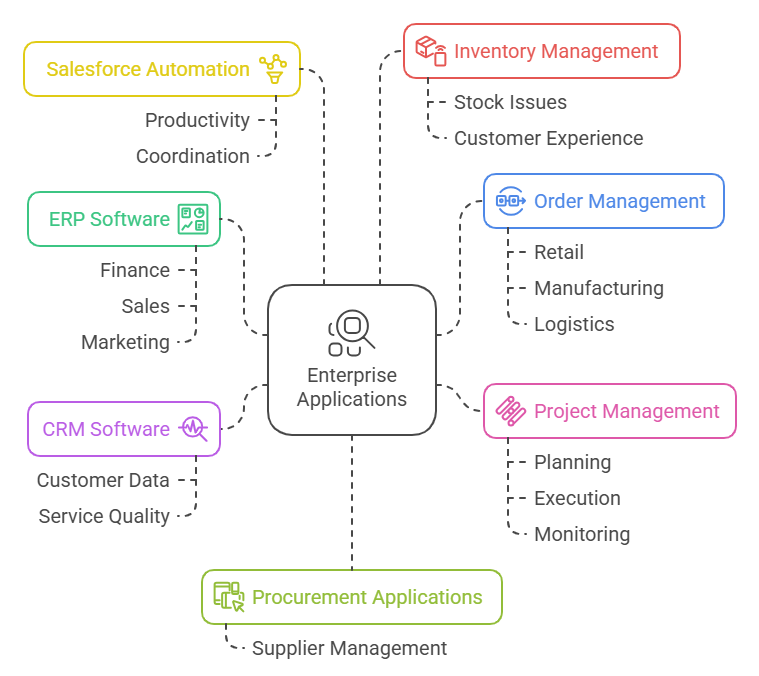
Enterprise applications come in various forms, each designed to address specific business needs. Choosing the right enterprise application tailored to your business needs can unlock significant advantages and positively impact your overall performance. Here are some of the most widely used types:
Enterprise Resource Planning (ERP) Software
ERP systems enable organizations to oversee and coordinate key operations such as finance, sales, and marketing. They connect back-end processes with front-end activities, offering a unified view of business performance.
Customer Relationship Management (CRM) Software
CRM tools are essential for businesses that engage directly with customers. They help organize customer data and enhance service quality by providing better insights into customer interactions.
Salesforce Automation Software
These applications assist in managing and optimizing sales and marketing processes. They contribute to improved productivity and better coordination across departments.
Order Management Systems
This type of software allows businesses to manage orders more effectively, ensuring smooth operations and higher customer satisfaction. It is widely used across industries such as retail, manufacturing, and logistics.
Inventory Management Software
This type of software allows businesses to track and manage their inventory in real time, reducing stock-related issues and enhancing the overall customer experience.
Procurement Applications
Procurement tools support businesses in sourcing and purchasing goods efficiently, ensuring smoother operations and better supplier management.
Project Management Software
These applications help teams and managers plan, execute, and monitor projects with ease, improving collaboration and accountability across departments.
What are the Characteristics of an Enterprise App?
It’s essential to understand the key characteristics or unique features that define enterprise applications. These include:
- Interconnectivity
An enterprise application should facilitate seamless communication among employees, enabling teams to coordinate their tasks effectively. With a well-connected system, the app serves as a central platform for collaboration across departments. - Fully Scalable
Scalability is an essential aspect of enterprise software, allowing it to grow in alignment with the organization’s evolving needs. This ensures long-term usability without the need to switch to a new system as the business expands. - Robust Security
Security is a key factor driving organizations toward enterprise application development. Since protecting sensitive data is non-negotiable, these applications must be built with strong safeguards to minimize the risk of cyber threats and data breaches. - Customization and personalization
Modern businesses aim to deliver tailored experiences to their employees. Enterprise applications support this by offering high levels of customization and personalization, ensuring the software meets the unique needs of individual users and teams.
How do You Choose the Right Enterprise Application Development Company
Choosing the right mobile app development company is a crucial step in ensuring the success of your enterprise application. To make an informed decision, there are several key factors you should consider before moving forward. Here’s what to keep in mind:
- Clarify Your Requirements
Choose a mobile app development company that is open to listening and fully understanding your business goals. When the team can clearly envision the final product, it becomes easier to move forward with confidence. - Check Reviews and Feedback
Before finalizing any partnership, go through client reviews on independent platforms. This helps you evaluate the company’s work ethic and determine whether they can meet your expectations. - Evaluate Technical Skills
A subpar enterprise app is never acceptable. Engage in detailed conversations with the company’s tech experts to gauge their capabilities. Reviewing past projects they’ve worked on can also provide valuable insight into their expertise. - Measure their Dedication and Priorities
Assess whether the company is committed to delivering your project on schedule and giving your needs proper attention. Choosing a team that values quality over profit ensures a more reliable and effective final product.
What Makes Intelegain the Right Partner?
Enterprise application modernization is a complex process that requires the right skills and experience to be carried out effectively. As a reliable mobile app development service provider, we offer legacy modernization services that help businesses upgrade and migrate their existing software with minimal disruption to data and operations.
Our team of experts works with organizations across different industries, using the latest technologies to provide solutions like application reengineering, API integration, cloud migration, and UI/UX enhancements. We assist you throughout the entire modernization journey, starting from a feasibility analysis and planning to successful implementation.